Showing posts with label Operations. Show all posts

Wednesday, June 15, 2022

Industry Spurs For Orogrande and El Paso and a New Name for El Paso Yard

I've been quite busy over the past month. I finally have come up with a name to replace El Paso Yard. The name for the yard from this time forward will be Reddington Yard. I have also added industry spurs to the town of Orogrande and started industry spurs for El Paso too.

I will first start off with how I came up with the name change for El Paso Yard. I started out scouring for catchy names by looking at street names, businesses, parks, and any kind of name that caught my eye on the Google Map of El Paso Texas. I found a few possibilities and added them to my Apple Notes list on my phone so I could contemplate them over and over in my mind for a few days. In the meantime, I had started watching a streaming program on Netflix called The Blacklist. I was so intrigued with one of the main characters, Raymond Reddington played by James Spader, that I decided Reddington was a possible rename for El Paso Yard. I liked the way Reddington Yard sounded so I went with it. Along with changing the name I had to go through the process of adding the track names and other details along with a few new routes to the JMRI car forwarding program Operations Pro.


Newly renamed Reddington Yard in El Paso loaded with rolling stock.


Next, I have added industry spurs to the town of Orogrande. Orogrande will have three maybe four industries on the railroad. I have decided on 2 of the industries and thinking about the third. One of the two will be a canning company and the other will have something to do with grain. Below, I found a grain facility while looking around Google Maps and I would like to duplicate this in some way for the grain industry for Orogrande. The location is Hartline Washington. Unfortunately the street view is limited so the only reliable photo I have is what is seen from the top. I guess I need to plan a trip to Spokane WA and drive to Hartline and get some photos.


Orogrande looking from the south.


Orogrande looking from the north. I had to tilt the camera a little to get the spurs in the shot.


Looking at the photo above the two spurs to the right would be the grain facility mentioned earlier and you can also see the canning company spur with the footprint of the building.


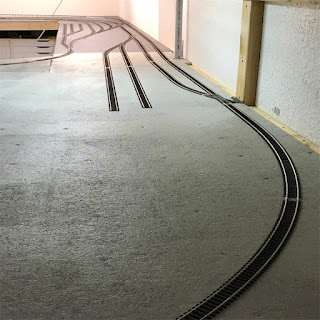
Moving on, I have started spurs for El Paso and have also completed the run-around track which is fairly long. In the photo below, you can see some rolling stock occupying the run-around track at the south end. The track the run-around extends from performs double duty as the lead track for industries for Orogrande and El Paso and as the main for the reverse loop for the continuous run option. El Paso will have two industries one, fairly large, called El Paso Paper Box and I have not decided as of yet for the other industry. Possibly something to do with aggregate or cement.


The beginnings of El Paso.


Here is the satellite view of El Paso Paper Box 


Well that's it for this post. If you like what you see, add your email to the follow by email box and follow along.


Tuesday, May 10, 2022

A Reverse Loop Upgrade

I have finally had something that was worthy of posting in the blog. Wiring is one thing that isn't much worthy for posting. Over the last few months that's all that has been taking place on the railroad since the last post. Wiring for power districts 2 and 3 on the bottom level has been completed. For review, power district 3 is the part of the railroad that exits at the bottom of the helix. Power district 2 consists of the trackage with the over and under loop that leads to the expanse over El Paso Yard. If I recall, in a past post I mentioned I wanted to rename El Paso Yard, wellll....I have yet to come up with a name that suits me. Some more research on my part needs to be done. With the beginnings of wiring the final power district on the botton level, (power district 1), I had connected a few drops to the main buss feed and had a short circuit after activating the power in that district, even though the reverse loop trackage was isolated. Turns out the isolated section needed to be expanded or reworked. This turned into a conundrum and a little confusion for me to get the wiring for the track that had been laid in it's at that time configuration.

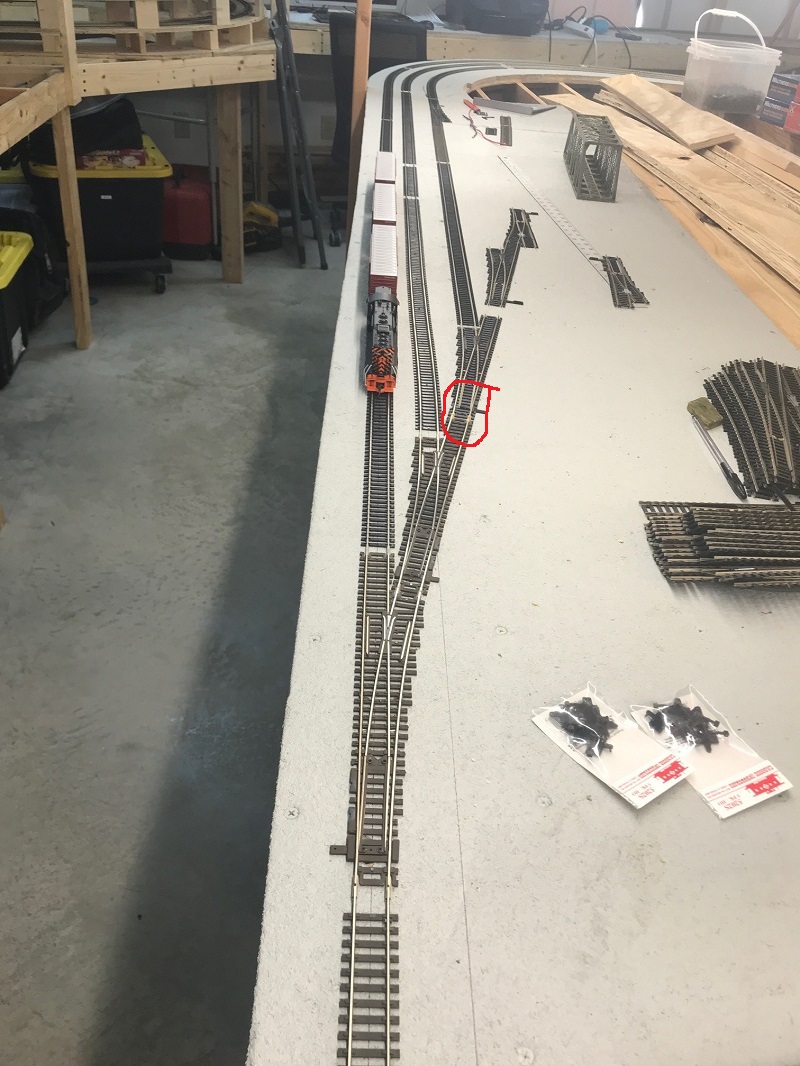
The photo below shows where the reverse loop trackage comes back to the main with the yard lead,  and the arrival/departure track leads off the turnout ladder which was not part of the reverse loop isolated section. That's where the problem occurred. The ladder along with the turn out back to the main are circled in red. I should have taken a better picture but the trackage is no longer in this configuration and this is the only photo I had before changes were made.


The short occurred on the short section of track between the double slip turnout and the turn out off the main circled in blue in the picture below.


I knew that I had to extend the reverse loop isolated section to this point but the other problem was that then the lead track to the yard and the arrival/departure track leads would have to be isolated as well. It occurred I needed some advise, so I gave a good friend of mine a call to explain my confusion and predicament. After a few hours of discussion a solution was born. What needed to be done was remove the double slip turnout, circled in blue in the picture above, and replace it with a regular turn out for the interchange yard, in the foreground of the picture, thus still allowing access to the interchange for the yard operator's switching duties. The turn out off the main would be moved down, toward the camera, and a new track would diverge from it with a crossing at the interchange yard lead. 


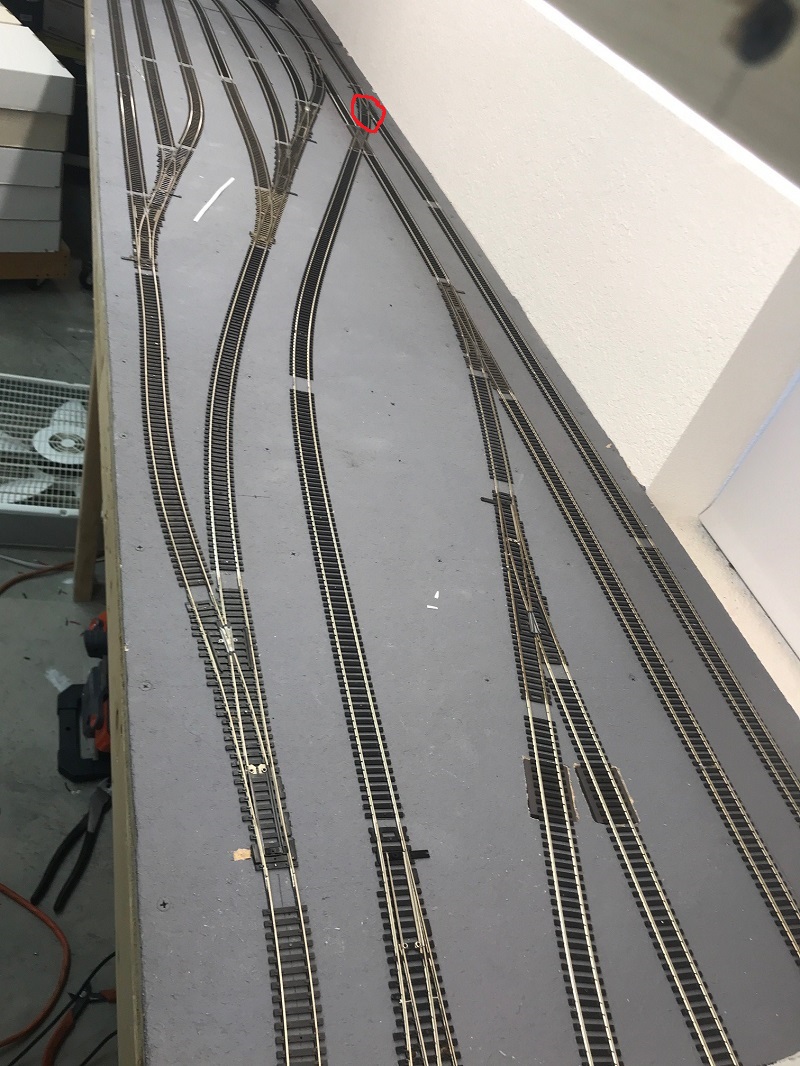
The picture below shows the configuration as it is now with the added section circled in red.


This configuration allowed for the yard lead and arrival/departure leads to be separate from the reverse loop both physically and electrically. The track extending out of the red circle diverging off the turnout to the left of the photo is a whole new loop added to makeup the reverse loop. 

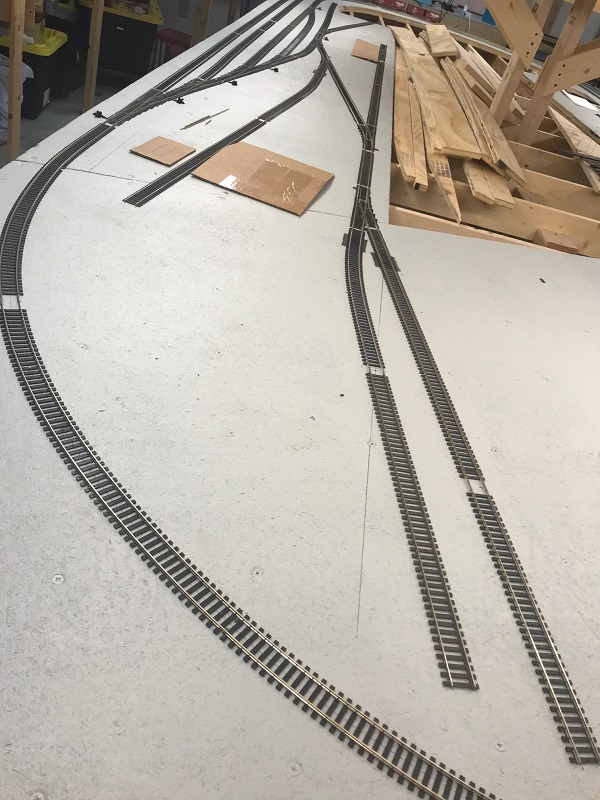
The next three photos show the new trackage that make up the reverse loop. The new addition is the innermost track.


The new trackage will serve double duty, not only will it serve as the reverse loop for the continuous run option but, also will be the lead track for industries in this area, which means all trackage connected to this will be part of the reverse loop eclectically. I don't foresee any problem with this as there will only be one operator making switching moves at one time.


The start and end of the reverse loop isolated section are shown in the photos below marked with a red circle at each end of the isolated section.


Hopefully the wiring in this district will be completed soon and trains can traverse the entire layout and efforts can be dedicated to the town industries. 


Friday, November 12, 2021

Mainline Track Installation Complete

 I have to say there has been plenty of progress since my last post.

I have run Romex and installed double ganged plugs for 120 volt power at points under the bottom level. This was done to supply the power to the command station and booster power districts power supplies, and layout lighting. This also makes it possible to turn on/off power to the entire layout with one wall switch. I also had to modify the boosters power supplies with a "delay on relay" and setting them to activate the boosters power supplies ten seconds after the command station came on. Digitrax boosters have known to confuse the command station if every thing were to come to life at the same time. 

On October 27, 2021 at 9:39 pm, the last section of track was installed on the Colorado & Rio Grande Central Railroad's mainline. Yeah!! Party On!!! The last section of track was installed in the town that will be known as Orogrande, NM. From what I figured using figures from XtrakCAD, the total mainline run and mainline only is 476.5 feet, give or take three feet. For a total run, not bad, I thought. The double track helix has 210 feet of track all together making the helix single line 105 feet roughly. 

Along with completion of the mainline I was able to complete track work for El Paso yard lead, arrival/departure tracks and related turnouts, caboose track, tracks for locomotive servicing facility, the return track to the mainline and southern turnout ladder for the arrival/departure tracks that make up the reverse loop. There was a track installed with a crossing on the main to represent an interchange with Southern Pacific along with two tracks for an interchange yard, and a siding for Orogrande which runs to El Paso. 


Picture of the El Paso yard throat along with the finished yard lead, the arrival/departure tracks with a locomotive escape track just left of the yard lead, the stub ended caboose track to the left of that and finally the mainline on the Woodland Scenics foam elevation sections to the farthest left.


A closer look (in order from the left) at the mainline, caboose spur, arrival/departure and yard lead. 


Pictured here (from the left) is the stub spurs for the El Paso locomotive facility, next to it, the yard lead and the next three tracks are the south end of the arrival/departure tracks with the turnouts and a double slip turnout to make the return to the mainline and complete the reverse loop. The far right track is the mainline from the north. Also pictured is the uncompleted, (at the time of this picture) track for the Southern Pacific interchange lead. The turn out in the middle of the page not joined will be a
spur for industry for the city of El Paso. 


Mainline and siding with open turnout that will lead to industry for El Paso.


Lower peninsula loop mainline and siding between El Paso and Orogrande.


The town of Orogrande with mainline and siding and open turn out for town industries in the back ground.


North end of Orogrande.


Another look at Orogrande looking railroad south.


I took this picture to show how the mainline's (back ground track) final descent and transition with the road bed. The arrival/departure and yard lead tracks in the center and the tail end of the locomotive facility track in the foreground are also seen.


Pictured here is the descent of the mainline with the caboose, arrival/departure tracks, and some of El Paso yard to the left.


Shown here is the completed Southern Pacific interchange yard with the Southern Pacific track crossing the main leading to points off the layout. Far in the background is the yard lead, A&D ladder and the El Paso locomotive faciltiy trackage.


Next project, with the completion of these sections of track in place, comes the tedious task of dropping feeds and district buss wiring along with wiring the reverse loop section with an auto reverser. Like mentioned before in other blog posts wiring is not very photo worthy or in my case not the most appealing part of building a railroad but it is very necessary. Other things to be completed are installing all the ground throws for the turn outs that need them, along with temporary ground throws for the mainline turn outs. The SP interchange yard will get uncoupler magnets and I will mount lighting under the upper peninsula for the bottom peninsula.

I'm excited about getting wiring done so I can start trackage work for the towns, expanding, and planning operations to include these towns. I'm also looking forward to shifting gears and getting involved with building structures for the towns and devoting some time to installing decoders in the CRGC Railroad's locomotive roster that need them and devoting time for signals. I also need to do some research and have some custom decals made with the railroad logo, after all I need to custom paint and decal a few locomotives with the logo. That's a topic for another post on the blog.

I'm also contemplating on changing El Paso Yard to something else since the yard is part of El Paso I thought a name to distinguish it from the city of El Paso would be fitting. Hmmm....(scratching my chin)....now to think of something unique. 


Friday, February 26, 2021

Progress Continues

TOWN NAMES

It's been a while since my last post to the blog so, I'll dive right into what has been happening on the layout. I have decided on names for the towns on the layout including one town I changed the name of, that has appeared in earlier posts to the blog. Note: Besides Santa Fe, El Paso, and Yrbi, unless otherwise mentioned, it has not been decided as to the types of industries or the number of industries that will occupy these towns. I'm trying to focus on getting mainline track completed so as to have a continuous loop without having to reverse a train in the opposite direction. 


First, Santa Fe, NM, the northern most town along with Denver and Salt Lake City represented by long staging tracks near Santa Fe Yard. I have also mentioned these towns in earlier posts.


Continuing southward is Clines Corner, NM which is just a town name on the railroad with no services provided by the railroad. I thought it would be a clever play on the name since the track sweeps through a left hand turn in the corner of the layout room, in essence it's just a name of a block of track on the railroad.


Town names continuing southward are as follows: Encino, NM, then Duran, NM, which will have Yrbi Junction interchange for interchange traffic to the branchline town of Yrbi along with a couple other undecided industries. 


Next is Carrizozo, NM, which is the town I changed the name of. This town used to be called Summit. This town will have spur tracks for trains to pickup or drop off dummy helper locomotives to traverse the helix as to enhance operations along with other industries. 


Next is Oscuro, NM, which is located halfway down the helix or halfway up the helix depending on the direction of train travel. No services provided by the railroad.


Tularosa, NM is the next town's name and is on the bottom level to the right of the helix. This town will also have spur tracks for pickup and drop off of dummy locomotives to traverse the helix. This town will also have way freight industries along with a large industry on the left side of the helix underneath the upper level branch line town of Yrbi.


The next town is Alamogordo, NM, then Orogrande, NM, then finally El Paso, Texas. One project I would like to tackle is to make a map drawing of the railroad so that I have something to reference. When this is completed I will post it to the blog.


BOTTOM LEVEL CONSTRUCTION

Track construction continued with the beginnings of construction on the bottom level at the bottom of the helix in Tularosa, YAAAY!! Mainline track was installed with turnouts for the helper locomotive spur tracks and turnouts for the lead track around the outside of the helix to the large industry just left of the helix. There will be a spur for an industry along the west wall of the layout room. 


The double track mainline coming from the helix combines into one track via a turnout at the north end of Alamogordo. The track continues and reaches a curve at the end of the peninsula and starts to gain elevation to go over the mainline, and over the to be constructed southern end of El Paso yard.


Tularosa, at the bottom of the helix. You can see a jut in space in the wall just to the right of the mainline and just past where the sub roadbed turns from brown to a lighter color. This will be the location of a building front to represent an industry. This will be a lift out building front for access to the window which is part of the room construction. There will also be a storage spur along with the spur for the industry. Also seen is the lead track for the large industry that will be to the left of the helix disappear in the background.


Mainline curving to the right where it meets the turnout to combine into one track in Alamogordo. In this photo you can see the foam riser where the main will cross over itself.


Alamogordo with foam riser in the background. In this photo, El Paso yard will be to the right of the chair. Alamogordo is located beneath Duran on the top level.


End of the peninsula and the south end of Alamogordo.


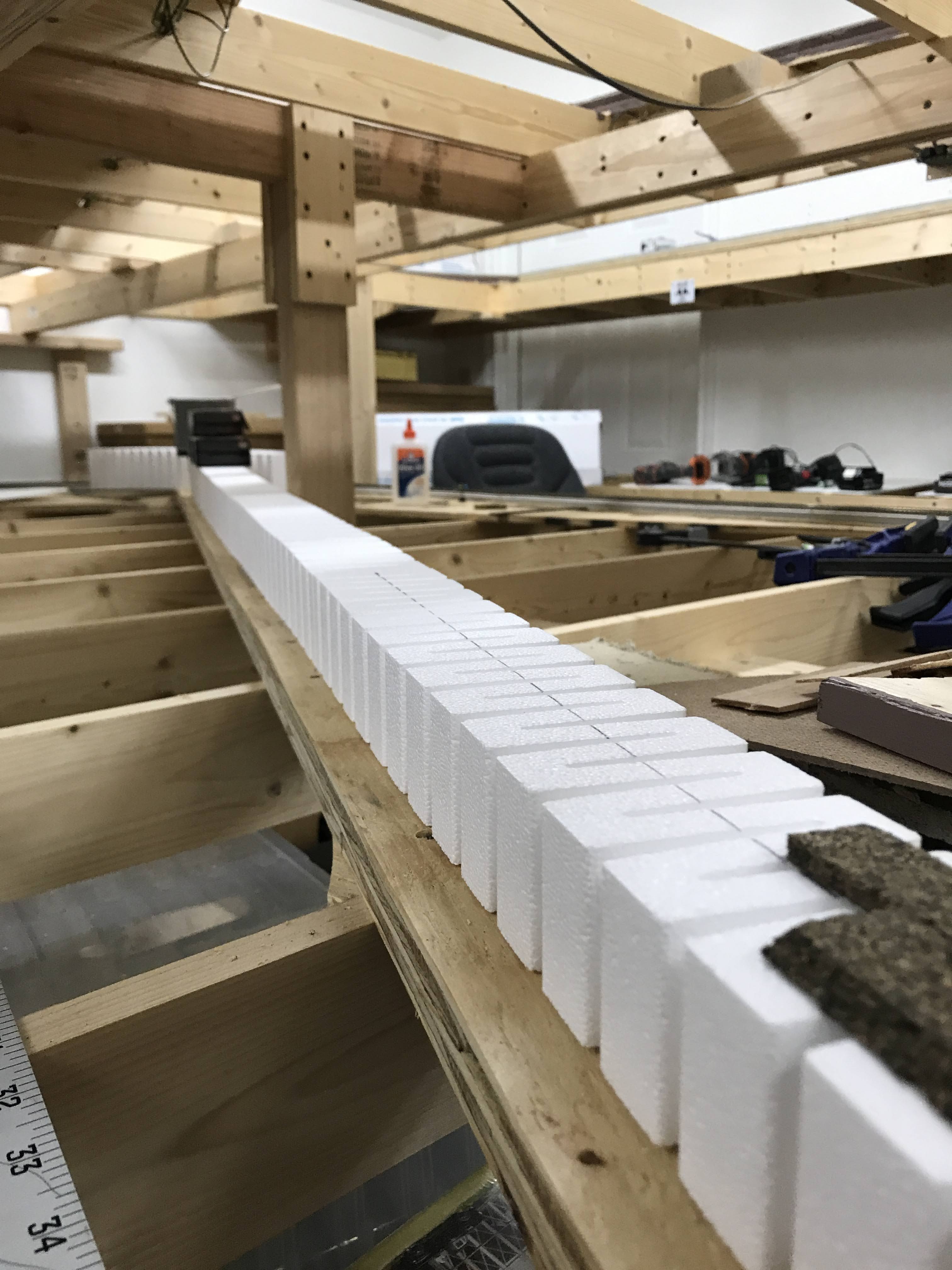
Beginning of the foam riser.


More photos of the foam riser. This riser is a 2% incline riser by Woodland Scenics.


Foam riser at the point where the mainline will cross itself.


In this photo you can see how the mainline will proceed and just to the right of this photo will be where the main will cross over the open ended part of El Paso Yard and continue along the north wall of the room back down to bench work level via another set of foam risers. Note: The foam riser end in this picture was not glued in its final position thus making it look like it would not line up with the curve representing the curvature of the mainline.


Next for mainline continuation is to get some bench work modifications made before sub-roadbed can be installed for track work of El Paso yard. El Paso yard has to be installed before mainline continuation. Wiring for Tularosa and Alamogordo needs to be installed as well. One other project I want to tackle is installation of infrastructure for bottom level lighting.


OPERATIONS

Yes! I have been able to operate trains from Santa Fe to the branchline town of Yrbi. At present I have a grain train and a mixed manifest that runs between the two towns. I also have a local that switches out the Grain elevator and the feed supply store in Yrbi. I have timed the operation of these three trains and it has come close to three hours to complete, from make up in the yard to switching in Yrbi to breaking the trains down at Santa Fe and running the local in Yrbi.
This may be the reason why progress has slowed. Haha!


 One thing I have not as yet tried is running a grain train or a mixed manifest from Yrbi to the two staging towns of Denver and Salt Lake City. Future thought and experimentation needed.


 The one thing I have discovered after a few operating sessions, is the need to install turnout motors and supporting electrical for the entrance turnouts for the yard leads and arrival/departure track turnouts near Santa Fe Yard. This will enable the Yardmaster to operate these turnouts from the Yardmasters position. As it is now, I have to keep walking back and forth from the Yardmasters side of the upper peninsula to the opposite side in order to operate these turnouts when needed. 

Enjoyed this post? Never miss out on a future post by following my blog.


Friday, October 02, 2020

Yrbi and Layout Updates

Yrbi

Things have progressed quite well in the terminus of the Yrbi branch line, known none other as the town of Yrbi. Just in case there is a question on pronunciation it is, YUR-bee. I came up with the name of Yrbi from listening to dramitized story by Louis L'amor on CD. One of the characters last name in the story was Yrbi.

 The grain elevator has been constructed along with one silo add on kit, both are Walthers kits, and placed in position. The yard ladder, spur tacks for the grain elevator, and a runaround track have been installed. There also was enough room to install tracks for two more industries for the town of Yrbi. These industries have not been decided on as of yet. It is planned that operations for Yrbi will be provided by a local switching job that will run to the interchange at Yrbi junction in Duran. The local job will pickup/drop off cuts of cars from/for mainline trains from/for destinations north and south on the mainline then return on the branch and switch those cuts of cars for the local industries at Yrbi. No mainline trains will be allowed on the branch. Turnout control will be provided by ground throws that are reachable. For the non reachable turnouts I plan on using Fast Tracks Bullfrog turn out controls. https://www.handlaidtrack.com/bullfrogs These will be used for the turnout ladder for the spur tracks for the grain elevator. I also plan on using these temporarily where needed on the mainline until automation for the mainline turnouts can be installed.


Town of Yrbi.


Yrbi grain elevator. I still need to construct and paint the head house for the add on silos on top, (missing in the picture).


Two views of the future industries, a close up and a view with the runaround and grain elevator spur tracks to the left. Notice the under the track uncoupling magnets in the top picture.


Close up of the yard ladder for the grain spur tracks. These turn outs will be controlled by the Bullfrog manual turn out controls mentioned earlier. This view also offers the view of the under the track uncoupling magnets too.


A close up view of the end of track bump stops that I'm using. These are made by Peco and are super simple to assemble and install.


There will be other additions added to the grain facility when they are constructed and I can figure out how to fit them in the space I have. I plan on putting a grain bin with a conveyor leg and a grain dryer, along with propane tanks to supply the fuel for the grain dryer. The propane tanks will add to operations by supplying a LPG tank car to transfer propane to the propane tanks.


Layout

After purchasing two Digitrax DB210 boosters, I have also completed assembly of the power station for the third power district and wired it in and provided the loco-net connections as well. It took me severals hours to trouble shoot a problem I was having with the booster when I got it installed.  I finally found the problem, it was due to a bad crimp on one of the loco-net cables from district two. When you purchase a command station from Digitrax they supply, (or at least it came with my command station purchased years ago), an LT1. This little device helps those of us that make up our own loco-net cables, to make sure they are assembled correctly. Had I used this little device I could have saved myself several hours of frustration and scratching my head wondering what was going on. Live and learn, every loco-net cable from now on will be checked before installed.


Power station for district three.


Digitrax LT1. 
When loco-net cables are assembled correctly and there is a throttle plugged into the loco-net there will be four LEDs that light up. The LT1 is also used to check Digitrax decoders to make sure they are good to go before installed in a locomotive.


That about does it for this post. If you are enjoying the Blog, please comment and let me know.

Enjoyed this post? Never miss out on future post by following my blog.


Wednesday, April 15, 2020

The Yrbi Branch

The Yrbi branch started as a track that ascended away from the main line at what will now be called Yrbi Junction. It was going to loop back and run against the north wall of the layout room above the cities of Denver and Salt Lake staging tracks. It was then to curve and move along the east wall of the layout room above the mainline. From there it would cross the mainline and the drill tracks for Santa Fe yard and feed a few industries inside the loop at a higher elevation on the peninsula encircled by the arrival departure tracks. As I thought about this over several months while working on the town of Summit, I decided to abandon this plan as the top level of the layout is a little excessive in height, which was a mistake in planning and progress on the layout has gone too far to fix. So it was decided more height was not the way to go. It is planned that a local will run between Yrbi and Yrbi Junction to set-out/pickup cars at the branch interchange tracks, at Yrbi Junction, which will be dropped off by mainline through freights.


The next set of photos shows Yrbi branch raised sub-roadbed, risers, and the section of sub-roadbed that ran above the cities of Denver and Salt Lake staging tracks, all of which have been removed.


Future north end of summit to the left.


The next three photos show the old sub-roadbed above the two staging tracks with the mainline closest to the camera. This is the north wall of the layout room and the wall in the back ground of the third picture is the east wall. As mentioned before the sub-roadbed and it's supports have been removed.


The next set of photos shows the Yrbi branch as it is today with continued construction as well as future construction. The sub-roadbed from Yrbi junction around the curve just had the risers removed and attached to the grid work thus the holes that were cut in the cork to allow access to the screws. The long section of tangent sub-roadbed was relocated just to the right of the main and attached to the grid work. Fortunately the cork was not glued down all the way on this section which made for easier disassembly.


As seen in this photo is the turnout for future branch interchange tracks and maybe a wayside industry or two. I'm also thinking of maybe constructing a wye to turn the local locomotive in the area behind the camera. Some extra thought needs to be given to this as I'm undecided at the moment.


The track will extend here and loop around and above the outer edge of the helix.


This will be Yrbi. A large grain elevator and maybe some type of mill with a wye if room allows.

Enjoyed this post? Never miss out on a future post by following my blog.